Minggu, 26 Juni 2016

Todays Readings
Genesis 15: 1-12, 17-18, Psalm 27, Philippians 3:17-4:1, Luke 13:31-35 or Luke 9:28-43


Read More..
Spare Parts, a band from the First Unitarian Church in Albuquerque, performed several songs at the Fall Gathering of the New Mexico Interfaith Power & Light on Saturday, Nov. 7. (See video of part of the keynote address by Interfaith Power & Light founder Rev. Canon Sally Bingham). Let Your Little Light Shine was one of the songs this wonderful group shared with participants.The song is very appropriate to recognize some of the people and organizations that received the Sprouts and Seeds awards from NMPIL that afternoon.


 Rev.Canon Sally Bingham poses with Sen Mimi Stewart
Sen. Mimi Stewart was recognized for her leadership in promoting an initiative to extend the residential, commercial, and agricultural tax credit for solar installations in New Mexico."This bill helps more New Mexicans take advantage of a pollution-free energy source that also creates jobs. New Mexico was just ranked in the top ten states for renewable energy job growth by Environmental Entrepreneurs," said the organization Environment New Mexico. The bipartisan initiative was approved by an overwhelming 37-5 vote in the New Mexico State Senate, but Gov. Susana Martinez, without an explanation, chose to use the pocket veto on the measure.  According to the Taos News, Sen. Stewart is considering bringing back the measure during the upcoming session of the legislature, perhaps trying to add a solar power tax credit to the tax incentive bill.

Fr. Christopher McLaren & Gary Gunthorpe, St. Marks
One of our Core Values at St. Mark’s is to be good stewards of the earth’s resources and to move toward a more sustainable future for our congregation, our families and our world. As the people of God in this place we are initiating New Energy @ St. Mark’s Solar Project as one way that we can begin to take practical and visionary steps toward becoming a good steward of God’s creation and an environmentally aware community of faith.  -Fr. Christopher McLaren

St. Marks on the Mesa Episcopal Church received a special recognition for its Solar Power Project, which aims to meet the energy needs of the house of worship with solar power.  The parishioners are investors in the project through a Limited Liability Corporation (LLC) that the church has set up to finance the project. The anticipated cost of the solar system is approximately $100,000, which  purchase an installed 30 kW photovoltaic system from New Mexico-based company PPC Solar.

Evelyn Sanchez & Kathy Sanchez, TWU
Environmental Justice has been defined by our community as, “Our Commitment to honor and protect the rights of ourselves, our habitat, and the fair treatment of all living things.”

NMIPL honored Tewa Women United for its consistent strong and collective voice creation care and environmental justice through prayer, inspiration, advocacy and witness  rooted within the spiritual ways of native women. TWU is a collective intertribal womens voice in the Tewa homelands of northern New Mexico.

Through its Environmental Justice Program, TWU aims to engage in local and international dialogue and activism on nuclear non-proliferation, human rights, and the rights of our Mother Earth.  The best way to achieve this aim is to integrate body, mind, and spiritual awareness into environmental justice advocacy, policy change, and community education. Another major goal is to empower Indigenous, women and their families, and people of color’s voices in local, national, and International networks and coalitions in order to build community capacity and leadership development.

Ruth Hoffman

Other individuals, faith communities and organizations honored on Saturday were Immaculate Conception  Catholic Church (Albuquerque), Santa Maria de la Vid Norbertine Community (Albuquerque), Patricia Gallegos of the organization Juntos (Albuquerque), Rev. Nick King (Mennonite Minister in Carlsbad), Ruth Hoffman of the Lutheran Advocacy Ministry (Santa Fe), Robyn Seydel of La MontaƱita Cooperative (Albuquerque) and Kathy Freeze of Catholic Charities of Central New Mexico (Albuquerque).
Read More..


Quarterly Meeting on Tuesday, February 9  12 Noon

First Presbyterian Church (I-25 and Martin Luther King Blvd.)

Alissa Barnes, director of Community Initiatives at Roadrunner Food Bank, will talk about the food banks new program on health and hunger.  Alissa is a member of the Interfaith Hunger Coalitions Advocacy Committee.

Our Education and Advocacy Committees will also present updates of their work over the past several weeks.  We are also seeking volunteers to serve on a committee to plan an Interfaith Service for World Food Day on Sunday, October 16, 2016

https://blogger.googleusercontent.com/img/b/R29vZ2xl/AVvXsEibl632FZ9rOiDf7NQhK2-EP6GQbQ1zP9L07OyM2fcX0KiHRMyeQc4KlFdxihe3d_TOsK4bYWI5DC0BM2xv7L4uXScYddJRUwB-b4iwwzbAwbpb-9ldbg7XYbSxi4QlXOy_Scjrzxqj8rJi/s320/FarmDay2.jpg

Data shows us that food insecurity and health go hand in hand. Food-insecure individuals are more likely to experience colds, stomach aches and migraines and suffer from generally poorer health than food secure individuals. In 2014, Feeding America conducted the Hunger in America study and found some staggering statistics  about New Mexico’s pantry clients:

  • Nearly half (46%) report being in poor or fair health;
  • 59% report choosing between paying for medicine or medical care or buying food at least once in the past 12 months;
  • 44% of hungry households said they have medical bills to pay, and;
  • 75% report purchasing inexpensive, unhealthy food as the most common way to have at least some food at home to eat.
As a food bank , we are focused on addressing Health and Wellness and leading in the national trend of food banks partnering with health organizations. We were pleased to share some of our Health and Wellness Initiatives with the Beyond Flexner Conference.  The conference brought a group of medical students, educators, and physicians together  to discuss social determinants of health.

More information in these links:
Healthy Hubs – Partnering with Organizations to Increase Health Outcomes
Working Together for a Healthy and Well Nourished New Mexico
Healthcare and Food Delivery Advisory Council Meeting Report
Read More..
Being students of the blogosphere, one thing weve noticed is a significant uptick in the number of self-published eBooks as of late.  Some eBooks are basically 10 pages worth of blog posts electronically stapled together, while others are 50+ pages of valuable, original research combined with first-hand experience and first-rate photography.  Weve seen plenty of both, but eBooks that have been selected to become part of a bundle or anthology seem to tend toward the second category.

Along those lines, if youre into eBooks about homemade stuff, theres a pretty good deal going on right now (through January 24).  The Self Reliant School has put together a bundle of eBooks and eCourses from dozens of authors and bloggers, and made it available for one week.  (Sort of like a Black Friday sale, but for online indie authors instead of big box retail stores.) The bundle contains 55 eBooks that you can download individually or as a huge electronic bookshelf, and 10 eCourses (or temporary memberships to sites with eCourses) that you can work through.  The cost for the total package is $29.97.

The main artwork theme for the bundle features a field full of dandelions, so theyve obviously got their priorities straight.

Good eBooks start at $0.99 and go up from there, so 55 eBooks for $30 is a pretty good deal already.  eCourses are normally more expensive than eBooks.  The Self Reliant School estimates that the bundle price is a little over 90% off of the cumulative price if you were to buy each eBook and eCourse individually.  Not many people (including us) are so into these things that theyd ever buy all 60+ individually, but if we find even a quarter of them useful, wed likely still come out ahead.

This link has a list of the titles, the authors, and where they come from.  The featured categories include Cooking from Scratch, DIY, Frugal Living, Green Living, Homeschooling, Homesteading, Natural Remedies, Preparedness, and Simple Living.  Some categories are lighter on content than others, so definitely check out the title/author list before buying.  But overall, there are lots of enticing titles, and we were intrigued enough to buy ourselves a copy.  We just found out about the bundle last week from electronic friend Leigh (one of the authors featured in the bundle), so we obviously havent had time to go through everything yet. 

But, after skimming through a few of the eBooks, we were impressed enough with the contents that we felt comfortable recommending the bundle to our readers (especially since its only available through this week) and decided to become affiliates of the bundle ourselves. So, if you use this link to check out the bundle and eventually buy a copy, well get a small commission and it doesnt cost you anything extra.  If you prefer not to go that route, you can still get the bundle here; no harm, no foul.  In either case, if you do buy the bundle, but end up disagreeing with our assessment of its quality, there is a 30-day money back guarantee.

Finally, theyre also offering a 15-day "Back to Basics Living Challenge," and you can sign up for free here (also affiliate link).  The challenge started on January 10, but we just signed up yesterday, and the confirmation e-mail says well get links back to the first eight days.  Nothing like upping the ante in a challenge by spotting the rest of the field a week-long head start!  To be honest, were not totally sure what to expect from this challenge, but it will probably be full of opportunities to buy the bundle if you need a few more nudges.

Thats all weve got for now.  Happy eLearning!


Read More..
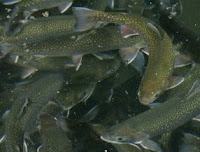
picture of high density arctic char farming in tanks
Arctic Char Growing In Tanks
My experiences raising Arctic Char in land based farms using tanks and raceways, with groundwater supplies and water recirculation aquaculture systems, have been positive overall.

I am what you may call a Charr fanatic since the early eighties and most of my experience has been hard won. The road to now has had its share of bumps and even a couple of cliff sized falls. There have fortunately also been some sunny times and even pay days. It has been interesting and rewarding in many ways but also frustrating at times.

I have grown Char at stocking densities that exceed the normal for rainbow trout or salmon in similar farming systems. In a properly designed and operated land based farm, this factor can lead to increased production amounts per unit of rearing space. The high density stocking characteristics of the species can allow the production intensification necessary in controlled systems and provide increased economy of scale, helping to offset the increased costs of building eco-friendly land based fish farms.Full article published at northernaquafarms.com "Arctic Charr Aquaculture - History and Experiences in Canada"

Related Content

Hobby Farming - A Growing Trend
Water Recirculation Aquaculture
Aquaponics - Sustainable Farming


Read More..

Sabtu, 25 Juni 2016

We wrote a couple weeks ago that we used the shook swarm method to put our bees on fresh comb and hopefully help them shake their case of EFB.  So the bees got some new digs, but what happened to the rest of the hive--the honey, combs, frames, and hive bodies that were contaminated? The whole process would make for a very long blog post, so well break it up into a couple posts.  But to whet your appetite, heres the overall schematic:

This whole ordeal is a zero-waste process, which is nice.  On tap for today: frames and comb, in particular, wax rendering.

Were continually adapting our wax rendering process.  Version 1.0 we wrote about before, and was more of a treatise on how not to render wax.  Version 2.0 is a solar melter frankensteined together from parts of our cold frame.  The back is a piece from the brooder box, and the places they dont fit perfectly together are plugged with fence panels.

Inside is a regular Langstroth box with a couple 9" x 13"-ish aluminum pans, each with about an inch of water in the bottom (to keep the wax from sticking to the pans).  On top is our winter-time bee feeder...

...which is lined with an old t-shirt and has another Langstroth box stacked on top.

The combs to be melted get piled on the t-shirt, and the melter is covered by the windows from the cold frame, which are stacked to make a double-glazed top.  The windows should be washed to maximize the amount of sunlight that gets through (ours werent), and every crack and crevice should be sealed tight because when it starts to heat up, every honeybee within smelling distance will be drawn like a magnet. 

We set the whole thing up on the garage roof since it gets intense sun for most of the day.

A few days later, the combs are mostly melted down...

...but the yield of wax is a little disappointing.  A couple things probably decreased our yield.  First, the t-shirt filter held up a lot of the wax itself.  Other folks have had better luck with a paper towel.  Second, the temperature should have been higher.  We added some reflective insulation around the walls, which helped, but not enough.  More insulation and a more airtight construction would have been better.  We could have washed the windows, which would have helped even more.  As it was, we got readings up to ~155 °F inside the box when the glass was on.  Good enough to melt the wax, which happens at ~145 °, but hotter would be better.

Also, when we tried a deep Langstroth box full of frames, we only got minimal melting

Plus, during the time spent with all our rejiggering, we found out that bees arent the only bugs interested in the wax.  Ants and earwigs love it, too.  But at least theres a silver lining: if you want bespeckled wax, the sprinkles are free!  The final takeaways from version 2.0?  There are some kinks to work out, but theres good potential.  Significant improvements wouldnt be too difficult if we could find the time to properly build a solar oven (which is on the to-do list anyway), but that will have to wait until a future date.  Also, some folks have noted that from some old combs, solar melting, even in a well-designed system, doesnt cut it.  Those combs need steam to release the wax.

Enter version 3.0.  Its inspired by a few other designs weve seen and Keiths comment on our original wax melting post.  The core is a big pot with some water in the bottom, and an aluminum pie pan boat.

That goes on top of the rebuilt Dakota Rocket Silo, which is burning the contaminated frames (and other wood).

A t-shirt filter is secured to the top of the pot.  The combs go in the filter.  The idea is that the steam rises up and condenses on the combs to melt the wax.  The wax is supposed to drip off the lowest point on the t-shirt into the pan below.

The first part of that works well.  The wax melts in half an hour to an hour if the fire is really roaring.

Unfortunately, it also runs down the side of the pot, so in addition to the nice wax cake we get in the pie pan, theres also a layer in the outer pot.  (This picture is from the following morning, after everything had cooled down.)  What we really need is some kind of impermeable insert in the top of the pot that prevents the t-shirt from contacting the pot directly, but that has a hole in the middle to direct the wax to the pie pan.  Probably could be done with aluminum foil. 

Also, we should point out that the wax accumulating on the water in the big pot can be a little dangerous because when a full layer of wax forms, it prevents the water from evaporating normally.  The result is that the water gets super-heated and instead of boiling steadily, it bumps violently, and then does nothing for a few minutes, before bumping violently again.  (The same thing can happen in your microwave if the water is very still while heating.)  When the bumping was happening in our setup, it was actually able to move the pot around, and if we hadnt been watching, it could have tipped over into the fire.  Since the wax is flammable, that would have gotten exciting quickly!

In any case, the melted wax and water can be poured into a pan to cool down.

The wax will form a cake on top, which can be easily removed.  We had a lot of comb to melt, so we ended up with several of these cakes.

To make them more compact, we built a makeshift mold, lined it with aluminum foil, and stacked pieces of the cakes inside.

When the summer heat had broken, we melted it in the oven at ~150 °F.

On cooling down, it solidified, at which point the foil and wax can be removed from the box.  The foil should readily peel away from the resulting block, leaving a nice chunk of purified beeswax to play with.

The stuff that got filtered out (slumgum) can be composted, used to start fires, or used to make swarm traps more attractive.  Since we started this whole ordeal to get rid of EFB, we wont be using it in our swarm traps.  We tried a few different ways of making slumgum fire starters, including packing it into paper egg cartons, wrapping golf ball-sized portions of it in old phone book pages, and packing a thin layer of it between layers of paper grocery bags.  In our experience, its the residual wax that actually starts burning, and the rest of the slumgum burns, but does more to inhibit the wax burning than to really support combustion.  So, adding additional dry, combustible material like paper, sawdust, or wood chips helps a lot.  Also, getting that extra combustible material to wick up and/or be coated in the wax helps it work under wet conditions.  Once we had everything packed in like we wanted it, we put it in a 200 °F oven for an hour or two to melt the residual wax and get it to soak into the paper. The egg cartons are easily divided, but the slabs with the grocery bags we cut into 1"-2" squares.

The t-shirts themselves can also be cut up to be fire starters, or saved for future use.  Since we dont want to transfer EFB to any future batches of wax, were going with option #1 for the t-shirts this time.

We did a quick trial run of all four of our different kinds of fire starters (clockwise from top: t-shirt, egg carton, phone book, and grocery bag), and we noticed that the phone book page-wrapped slumgum balls were hard to light and keep lit, the wax-soaked t-shirt lit the fastest and burned up the fastest, and the egg carton-slumgum and paper grocery bag-slumgum fire starters had good longevity but could still be easily lit by a match.

Finally, a quick note on cleaning up the wax.  Many folks caution that its nigh-on-impossible to clean up cookware items that have been contacted by the beeswax, but weve not found that to be entirely true.  First, the thin coating that forms on pots and pans will eventually wear off in continued use, and beeswax is inert in the human digestive tract, so one approach is to ignore it; no harm, no foul.  Second, weve found that mixing beeswax with some kind of vegetable oil (olive oil, canola oil, soybean oil, etc.) when both are above the beeswax melting temperature (~145 °F), makes a blend that can be cleaned up with soap and water, even when cooled back down to a touch-safe temperature.  And third, a scouring powder, in particular Bon Ami, which doesnt have anything in it that we would be worried about contacting food, cleans things up pretty well.

There you have it!  Our current procedure for processing contaminated wax and frames, waste free.  How to you render and clean up wax?


Read More..
In mid-November, we put our fall batch of broilers in the freezer.  Now that the books are closed on them, we wanted to take a look and see if we came out any better than our previous batches of meat chickens on a price per pound level.  We stuck with the same feed source we had for the previous batches, but we had a slightly different feeder setup that probably saved some wasted feed.  We also raised all Cornish Cross this time around instead of Red Rangers or Pioneers (or a mix of those and Cornish Cross), and the birds came from Meyer Hatchery instead of McMurray.  Ok, heres the numbers!

We ordered 25 birds, and one came free, so we started with 26.  We lost two as chicks, and had to cull three more at the six-week mark due to leg injuries, so 21 birds made it to the butcher date at eight weeks.  Thats a mortality rate of 19%, or 8% if we dont include the six-week culls, although 26 birds is a pretty small sample size.  The butchering price increased from $3/bird to $4/bird for us this year.  The dressed-to-live weight yield is 72%, and the feed conversion ratio is ~2.5:1.  For comparison, the industry figures are 4-5% mortality rate, 71-74% dressed-to-live weight yield, and just under 2:1 feed conversion ratio.

The feed again accounted for the major portion of the overall cost, but the initial cost of the chicks and the butchering were also significant costs.  If we lived in a place where we were allowed to butcher them ourselves, we could have decreased the price to $3.34/lb dressed weight.  Some day!

To compare with other organic whole chicken prices, were right in the range of whats available online (sources here and here), and a little above whats available in our local Sprouts grocery store.  Of course, if we got it from them, we wouldnt get any fertilizer for the garden!  Were also $0.54/lb less than our batch last year, even with the increased processing price, so were definitely moving in the right direction.

Now thats a happy freezer!


Next steps for us? Start growing our own feed and get better set up to do our own butchering!

How do your home-grown chicken prices fall out?


Read More..