Tampilkan postingan dengan label to. Tampilkan semua postingan

Jumat, 01 Juli 2016

You may know that I garden in the soil and using aquaponic techniques in South Florida.  Our climate and pests can make gardening in zone 10B a real challenge.  But it is not the largest challenge in my gardening life.  My largest challenge is maintaining the gardens in my North Carolina mountain cabin.

I may be there one week a month, three weeks a month, or not at all for months on end.  Just because I am not there on a regular basis does not mean that I accept that I cant have beautiful gardens.  It just takes lots of planning and dependence on some old, time-tested plants and a few new ones as well.

The first challenge in my North Carolina mountain garden is that it sits at 3,200 feet in a mixture of clay, rock, and some pretty good soil...it just depends on where you dig.  It sits in USDA Zone 5B and I have spent my life gardening in Zones 8, 9, and 10.  In other words, a totally different part of the south where winters are milder and you almost never see the mercury plunge below freezing for long.  So the first thing was learning to garden out of my comfort zone.  I depended quite a bit on regional gardening boards, the University of North Carolina, and the gardening column in the local weekly paper.

My second challenge was to find plants that could thrive in the sunshine in the spring when there are no leaves on the trees, the dense shade in many areas once the leaves are on the trees in the summer, and the brutal cold of winter with the first snowfall happening in October or November.

I realized within the first year that annuals are pretty much out of the question, except as accent plants. My go to plants became the ones that are either hardy evergreens (like boxwood) or plants that become dormant in the winter and resume growing in the spring.  Bulbs are great for this!

Hurray for daffodils, crocus, tulips, iris, daylillies, gladiolas, and hostas!
Daffodils in Snow
These bulbs/corms can provide a procession of color in a bed without much fuss or muss. They dont need heavy fertilizing and can thrive on neglect.  Just a little dividing every once in a while and a covering of leaves in the fall are about all the attention they require.  The crocus and daffodils begin the procession of color.  They will even sprout and bloom through the snow.

Daffodils without Snow
Daylilly 
Next come the tulips and iris to end the Spring season.  Come summer, the daylillies, gladiolas, and hostas  provide colorful foliage and pretty flowers.  The daylillies are particularly handy when you are planting on a slope and need good roots to prevent erosion. 

Hydrangeas are a great bush for the occasional gardener.  They grow and bloom each year from the prior years growth.  The dont need any sort of pruning unless you are looking to simply control the size of the plant.  My experience is that few pests want to eat the plant but the birds and butterflies love them.  Because they are dormant in the fall and winter months, you dont have to worry much about them freezing.  We have had below zero temperatures and the hydrangeas didnt seem to mind a bit: they just slept on.
Oakleaf Hydrangea

Other great bushes that are fairly fuss-free are azaleas, buddleias, and camellias.  I have been told that camellias can have pest problems but that has not been my experience so far.  If you are in a cold zone, just make sure that you select a camellia that is cold hardy.  Some are and some arent.  I learned the hard way.  Another great blooming plant that can take the cold and neglect is the rhododendron.  It will bloom in the shade, part-shade or even the sun.  Its cousin the mountain laurel also prefers to be left alone, making it a great choice for the occasional gardener.

Speaking of plants that want to be neglected, no occasional garden would be complete without a knock-out rose or two or three.  I love roses, but can only grow them in pots in south Florida because of our nematode problem.  In North Carolina, they can be grown in the soil but require care
Knock Out Rose
enter the patented Knock Out Rose.  I have both single and double types and both perform beautifully.  Come winter you just know they are dead because they dont have a leaf on them, but in spring they start to grow quickly.  Because I have such shady areas, it is important to have plants that arent prone to mildew problems.  I havent had a bit of mold problem with these roses at all.  Makes me think about replacing the ones I have in my full-time garden!

If you notice the one thing I have not mentioned in the occasional garden is the presence of grass.  Having a lawn is labor-intensive.  You have to feed it to encourage it to grow and then turn around and mow once you are successful in getting it to grow.  If you arent going to be around on a regular basis, you arent going to have a great lawn.  My approach is to let the grass that wants to grow go ahead and grow and I pay someone to mow all three acres that has some form of grass on it once a month once the weather is warm, and weed eat the non-mowable areas every few weeks.
Hosta

Whether you own a vacation home and are looking for gardening tips or you just want a beautiful garden without putting much work into it, I hope you will use these ideas to create your own garden that only needs your occasional attention to survive.  If you want to visit the Smoky Mountains and see what is blooming in my garden, go to Cabin On a Creek and check availability.  Its the occasional gardeners place where peace and quiet come together.
Read More..
Karen Olson, the founder of Family Promise, is the featured speaker at the grand opening of the new home for the organizations Albuquerque affiliate on Sunday, November 1, 2015, at  3:00 p.m. You are invited to come hear her amazing story and to celebrate Family Promise of Albuquerques new space and expansion at 808 Edith Blvd NE (map).  For more information, call 505-268-0331.

Below is a speech that Ms. Olson gave at the  University of Arkansas Clinton School of Service in May of 2011. 

Read More..

Kamis, 30 Juni 2016

Cooke to process 240,000 quarantined salmon in N.B. | The Chronicle Herald

Salmon farming cages at St.Albans newfoundland

LIVERPOOL — A New Brunswick company has begun transporting thousands of fish affected by an outbreak of infectious salmon anemia from a quarantined Nova Scotia aquaculture farm to a fish plant for processing.
Cooke Aquaculture says about 240,000 fish will be transported from its farm off Coffin Island near Liverpool to a fish plant in Blacks Harbour, N.B., over the next month. The processing started last week, it said. Read More
Read More..
Image from OpenClipArt
1,659 

That figure represents the number of supporters of Rick Steves who answered his challenge to help raise funds for Bread for the World during the Christmas season in 2015. The travel writer matched donations dollar for dollar.  People who donated $100 received a gift from Steves: his European Christmas gift package or his Complete Collection 2000-2016 DVD Box Set (all 100 of my travel shows)."


Steves and ex-Sen. Tom Harkin at Bread 40th anniversary (2014)
In a Thank You letter to supporters, Steves said:

"Together, you contributed $218,000. And with my match, collectively, we raised over $430,000 to help power BFTWs work in explaining to Congress the needs of our nations poor, homeless, and hungry people.

 "We all want to get our fiscal house in order. And BFTW has been very effective in its advocacy work encouraging our government not to balance the budget by cutting vital services to our nations most needy." 

Thanks so much for making this a very expensive Christmas for me. Giving like this, in partnership with caring travelers like you, makes my work even more gratifying than it already is. Happy holidays and Merry Christmas to all.
Read More..

Rabu, 29 Juni 2016

The Bernalillo County Commission is hosting the  Cultivating Bernalillo County Food Summit on Monday, November 16, at  Hotel Albuquerque, 800 Rio Grande Blvd. NW (map), 7:30 a.m. to 5:00 p.m.

Anyone working with food (farming, processing, selling, redirecting, etc.) is invited to the event, which offers the ability to network with many people involved in the food industry.

Matt Rembe, executive director of Los Poblanos Historic Inn & Organic Farm, and Celina Aldaz-Grife of Celinas Biscochitos are featured speakers.

Organizers are  encouraging everyone to register online by Saturday, November 14. Registration is $10 and includes breakfast and lunch (and organizers need a count), Please register by  Saturday, November 14.  For more information, contact Shawn Perry-Turner by e-mail (spturner@bernco.gov) or call (505) 468-7817
Read More..

Selasa, 28 Juni 2016

Images (left to right, top to bottom) Joe Goss, Tony & Julianna Pelletier, Sarah Sadler, R.L. Vallier, Brennan Diem
On Friday, February 5, the Harwood Art Center will open a gallery featuring works from the artists of ArtStreet through an exhibit entitled Recycled Heart. The annual showing brings the injustice of poverty and homelessness together while capturing the diverse, distinct, and highly individual response of the ArtStreet Artists to community chosen themes. The public is invited to the gallery opening, which will take place at 6:00-8:00 pm. 

The works will be on display on February 5-25 at the Harwood Center, 7th St. and Mountain Rd. NW (map), Monday-Thursday, 9:00 am- 5:00 pm, and 9:00 am to 4:00 pm on Fridays.  

ArtStreet, celebrating its 20 years of service, is a project of Albuquerque Health Care for the Homeless. The space gives artists – homeless and housed –– a common forum to share their experiences, coming together to make art and organize public exhibits like this. One component of the ArtStreet program is a community based open art studio.
"ArtStreet artists channel the potential within themselves and within discarded objects to create something new. They quickly learn to see media in a fresh way, enabling them to transform raw materials into works of art."   -from Recycled Heart post card
The exhibit is made possible in part with funding from the City of Albuquerque, City of Albuquerque Urban Enhancement Trust Fund, New Mexico Arts (a division of the Department of Cultural Affairs), the National Endowment for the Arts, and the Harwood Art Center of Escuela del Sol Montessori. 
Read More..
My ecumenical vocation began when I helped organize a CROP walk as a high school junior. That experience gave me a larger vision of the church beyond our denominational tribalism. Jesus’ prayer for his disciples ‘that all may be one’ (John 17:11) defines ecumenism as both gift and task.   -Rev. Scott D. Anderson
Rev. Scott  Anderson, executive director of the Wisconsin Conference of Churches since 2003, will be the keynote speaker at day-long event sponsored the New Mexico Conference of Churches. The event will be held at St. Johns United Methodist Church,  2626 Arizona NE (map), Albuquerque, on Saturday, Oct. 24, 9:00-3:00 p.m.

Rev. Andersons work in Wisconsin is focused on strengthening the public policy witness of the Council and initiating a new area of ministry focused on equipping congregations to engage the mission field that is now at their doorstep. See his full biography

His talk in Albuquerque is part of the NMMCs Congregational Vitality Series. In addition to a keynote address by Rev. Anderson, the program will feature large group presentations and small group discussions about the practical "nuts and bolts" in our community.  The cost is $35 (includes lunch)

And Rev. Anderson will be on hand Friday for an NMCC fundraiser and open house. He will  discuss the Wisconsin Council of Churches project with Parker Palmer, “Season of Civility.”  This event will take place at the New Mexico Conference of Churches office, 1019 2nd St. NW (map). The cost  is $50.00

Click on this link to purchase your tickets online for either the Friday fundraiser or Saturdays event or both.
Read More..
Report:

KINGSTON, R.I., March 9 (UPI) -- U.S. residents are eating four times as much salmon as they were 20 years ago, most of it imported farmed salmon.
Researchers at the University of Rhode Island found that the value of wild salmon caught in the United States and Canada dropped from $800 million to $300 million between 1980 and 2004, the Providence Journal reported. In 1980, only 2 percent of the salmon sold globally was farmed, which grew to 65 percent in 2004.

"The Great Salmon Run: Competition Between Wild and Farmed Salmon" by Cathy A. Roheim and James Anderson of URI and Gunnar Knapp of the University of Alaska concludes that wild salmon cannot supply the market farmed salmon has created.

Full story Science Daily

Its an important point thats reached when harvesting the wild cannot satisfy the demands of the population. History demostrates that dewindling capture quanities of all wild animals and harvests of wild foods were the main deriving forces that created the need for all types of agriculture.
Read More..

Minggu, 26 Juni 2016


Quarterly Meeting on Tuesday, February 9  12 Noon

First Presbyterian Church (I-25 and Martin Luther King Blvd.)

Alissa Barnes, director of Community Initiatives at Roadrunner Food Bank, will talk about the food banks new program on health and hunger.  Alissa is a member of the Interfaith Hunger Coalitions Advocacy Committee.

Our Education and Advocacy Committees will also present updates of their work over the past several weeks.  We are also seeking volunteers to serve on a committee to plan an Interfaith Service for World Food Day on Sunday, October 16, 2016

https://blogger.googleusercontent.com/img/b/R29vZ2xl/AVvXsEibl632FZ9rOiDf7NQhK2-EP6GQbQ1zP9L07OyM2fcX0KiHRMyeQc4KlFdxihe3d_TOsK4bYWI5DC0BM2xv7L4uXScYddJRUwB-b4iwwzbAwbpb-9ldbg7XYbSxi4QlXOy_Scjrzxqj8rJi/s320/FarmDay2.jpg

Data shows us that food insecurity and health go hand in hand. Food-insecure individuals are more likely to experience colds, stomach aches and migraines and suffer from generally poorer health than food secure individuals. In 2014, Feeding America conducted the Hunger in America study and found some staggering statistics  about New Mexico’s pantry clients:

  • Nearly half (46%) report being in poor or fair health;
  • 59% report choosing between paying for medicine or medical care or buying food at least once in the past 12 months;
  • 44% of hungry households said they have medical bills to pay, and;
  • 75% report purchasing inexpensive, unhealthy food as the most common way to have at least some food at home to eat.
As a food bank , we are focused on addressing Health and Wellness and leading in the national trend of food banks partnering with health organizations. We were pleased to share some of our Health and Wellness Initiatives with the Beyond Flexner Conference.  The conference brought a group of medical students, educators, and physicians together  to discuss social determinants of health.

More information in these links:
Healthy Hubs – Partnering with Organizations to Increase Health Outcomes
Working Together for a Healthy and Well Nourished New Mexico
Healthcare and Food Delivery Advisory Council Meeting Report
Read More..
Being students of the blogosphere, one thing weve noticed is a significant uptick in the number of self-published eBooks as of late.  Some eBooks are basically 10 pages worth of blog posts electronically stapled together, while others are 50+ pages of valuable, original research combined with first-hand experience and first-rate photography.  Weve seen plenty of both, but eBooks that have been selected to become part of a bundle or anthology seem to tend toward the second category.

Along those lines, if youre into eBooks about homemade stuff, theres a pretty good deal going on right now (through January 24).  The Self Reliant School has put together a bundle of eBooks and eCourses from dozens of authors and bloggers, and made it available for one week.  (Sort of like a Black Friday sale, but for online indie authors instead of big box retail stores.) The bundle contains 55 eBooks that you can download individually or as a huge electronic bookshelf, and 10 eCourses (or temporary memberships to sites with eCourses) that you can work through.  The cost for the total package is $29.97.

The main artwork theme for the bundle features a field full of dandelions, so theyve obviously got their priorities straight.

Good eBooks start at $0.99 and go up from there, so 55 eBooks for $30 is a pretty good deal already.  eCourses are normally more expensive than eBooks.  The Self Reliant School estimates that the bundle price is a little over 90% off of the cumulative price if you were to buy each eBook and eCourse individually.  Not many people (including us) are so into these things that theyd ever buy all 60+ individually, but if we find even a quarter of them useful, wed likely still come out ahead.

This link has a list of the titles, the authors, and where they come from.  The featured categories include Cooking from Scratch, DIY, Frugal Living, Green Living, Homeschooling, Homesteading, Natural Remedies, Preparedness, and Simple Living.  Some categories are lighter on content than others, so definitely check out the title/author list before buying.  But overall, there are lots of enticing titles, and we were intrigued enough to buy ourselves a copy.  We just found out about the bundle last week from electronic friend Leigh (one of the authors featured in the bundle), so we obviously havent had time to go through everything yet. 

But, after skimming through a few of the eBooks, we were impressed enough with the contents that we felt comfortable recommending the bundle to our readers (especially since its only available through this week) and decided to become affiliates of the bundle ourselves. So, if you use this link to check out the bundle and eventually buy a copy, well get a small commission and it doesnt cost you anything extra.  If you prefer not to go that route, you can still get the bundle here; no harm, no foul.  In either case, if you do buy the bundle, but end up disagreeing with our assessment of its quality, there is a 30-day money back guarantee.

Finally, theyre also offering a 15-day "Back to Basics Living Challenge," and you can sign up for free here (also affiliate link).  The challenge started on January 10, but we just signed up yesterday, and the confirmation e-mail says well get links back to the first eight days.  Nothing like upping the ante in a challenge by spotting the rest of the field a week-long head start!  To be honest, were not totally sure what to expect from this challenge, but it will probably be full of opportunities to buy the bundle if you need a few more nudges.

Thats all weve got for now.  Happy eLearning!


Read More..

Jumat, 24 Juni 2016

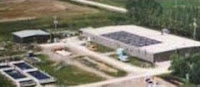
picture of land based fish farm in manitoba
My First Fish Farm in Manitoba
I often receive requests for information on Aquaculture in Manitoba. Many requests are from persons wanting to research the business potential of fish farming as an alternative or supplementary form of agriculture or as a standalone business. The following provides a quick overview of Aquaculture in Manitoba with links to further resources.

Aquaculture, or fish farming, has been practiced in Manitoba since the late 1960s. It began with experimental stocking and fish growth studies in “pothole” lakes in the Erickson area in southwestern Manitoba. These pothole stockings were conducted by the DFO Canada Freshwater Institute and the Manitoba Government. Many of these lakes were considered to have the potential to be productive waters for raising fish and experimental stocking and monitoring was undertaken to help determine fish performance. Rainbow trout quickly became the species of choice due to their rapid rate of growth and their general hardiness. Rainbow trout continue to be the primary species stocked into lakes and dugouts in Manitoba.

Manitoba fish farming activities have primarily taken the form of hobby farming, involving the stocking of fingerling sized young fish into farm dugouts or ponds on private lands, or into small lakes on Crown lands, primarily for recreational purposes. The stock is generally allowed to grow by foraging on available food sources within the pond. This practice is known as Extensive Aquaculture. Depending on the owner preference, pond environment and fish growth desires the food source is sometimes supplemented by the feeding of prepared commercial fish food.

A good source of information on this type of activity is a booklet “Trout Farming in Manitoba”, available from the Fisheries Branch of the Manitoba Department of Water Stewardship.

Intensive aquaculture, which takes the form of fish rearing in cages, tanks, or raceways, is relatively new in Manitoba. There are currently only a few commercial aquaculture operations in the province. However interest in commercial aquaculture as a means of agriculture diversification or as an alternative crop is increasing.

Intensive aquaculture requires a higher degree of rearing environmental control, increased fish stocking densities, controlled feeding rates with prepared nutrient dense diets and greater farm management requirements. Intensive aquaculture operations require more capital investment , involves the use of more technologies and equipment and necessitate increased levels of manpower .

As mentioned extensive aquaculture is carried out in lakes or dugouts, present and future intensive aquaculture operations in Manitoba will involve the growing fish inside buildings under controlled conditions using tanks of varied sizes and shapes (land-based), or in cages moored in deep lakes.

The province of Manitoba offers “A Guide to Intensive aquaculture in Manitoba” as a good starting point for those exploring commercial fish farming in the province.

I always advise people to research the potential of Aquaculture as a business in as much detail as they can before deciding if its an opportunity that fits both your financial and location resources.

Aquaculture does offer good potential for financial returns and it can be a rewarding business and one you can be be proud of. Like any other idea, your business size and scope has to suit you and your resources to have the best chance for success.

More information on commercial land based Aquaculture can also be found at This link.

Information on Aquaponics farming, an excellent way to grow your own supply of fresh herbs, vegetables and fish year round can now be found at This Page.

Update: A Canadian model aqua-farm demonstrating the viability of indoor fish rearing on the Prairies is now producing Rainbow Trout. The farm is a research data collection site to answer the many questions would-be investors and regulatory agencies will have about fish-farm operations. Link to AGcanada.com Story

B&B Freshwater Fish Farm owned by the McDonald family and located near Gunton Manitoba, is expanding. Rick McDonald converted an unused hog barn to fish farming. They now raise Arctic Char and maintain one of the few certified disease free breeding stocks in the world today. They produce Arctic Char eggs and young fish plus some Rainbow Trout Read More Here.

Read More..
Through photography children share their innermost feelings. The opportunity to reveal their dreams in photographs shows each child how much their dreams MATTER! Their hopes and dreams captured in quiet moments tell a story that few adults can imagine. "When you show children that you care about what they dream for in life, perhaps a child who never felt he or she had self worth, now will."  -Linda Solomon
When Emily, then 7 years old,  she was presented the opportunity to express her dreams via a photograph. Her dream was the very grown-up goal to end world hunger.

Emily was one of 19 homeless children in Albuquerque who were afforded this opportunity back in 2012. Darrionte, then 8 years old, is featured in an article published in The Albuquerque Journal on Sept. 6, 2012.

With the support of local car dealership Galles Chevrolet, the pictures were made into a set of greeting cards, which the Barrett Foundation  sold in 2012. Even though the cards were created three years ago, they still touch our hearts and are still very relevant today.

A national project
Project director, renown photographer Linda Salomon, has brought  Pictures of Hope to children living in shelters in Tucson, El Paso, Philadelphia, New York City, Flint, Michigan, Tulsa, Raleigh, Fayetteville, Charlotte, Kansas City, St. Louis, Washington, D.C., Minneapolis and Albuquerque.

Heres how it works. Solomon presents a photo tutorial to the children at each shelter. At the conclusion of the tutorial, the children are surprised with digital cameras donated by Walgreens and given their first photo assignment as young photojournalists. Each child has a Picture of Hope card showcasing one of their photographs. All the children in each city celebrate with their mentors at the "Meet The Young Artist" receptions when the Pictures of Hope cards are launched. Its a special day no one will ever forget.

On her website, the photographer explains her motivation. "The numbers of homeless children in the US are the highest in our history, 2.5 million. One out of thirty children are homeless," said Ms. Solomon. "The mission of Pictures of Hope is to change lives, one life at a time. We show each child there is hope and they are not forgotten. Pictures of Hope touches the soul of each child we meet."
Read More..
If you ask a homestead-minded person what their favorite spring greens to forage are, youll probably get responses like dandelions, lambs quarters, mallow, maybe even stinging nettles.  But one thats rarely mentioned is sorrel (or the related dock).  Its the Rodney Dangerfield of spring greens. (It dont get no respect!)  Thats a real shame, because Rumex species are delicious, nutritious, and high-yielding.  We recently had the chance to gather up a mess of sorrel growing in our back yard and cook it up into a couple of dishes that are likely to become mainstays in our culinary rotation. That is, they were tasty, pretty easy to cook, and the main ingredient (sorrel) is easy to gather a lot of over a long season.  Read on, and hopefully be inspired to forage some sorrel yourself!

Here is the sorrel in its natural environment.  Whats that you say? Its hard to discern it from all the burdock, buckthorn, and other weeds?  Thats just our first line of defense against sorrel poachers.  Were pretty sure this cultivar is common sheep sorrel, Rumex acetosella.

Here is a comparison for how much sorrel we were able to harvest (right) in roughly the same amount of time as it took to pick the swiss chard (left).  That is, although we didnt calculate it, the Berry Modulus is probably higher for our sorrel than our chard.  We rinsed the sorrel, sent the leaves into a couple varieties of sorrel pesto, and the sent the stems into a soup. (The chard went into a quiche.)

For pesto, we used this recipe as a starting point, then improvised from there. We only had ground almonds for the nutty part, but they worked.  We used garlic powder instead of raw garlic cloves for one batch; that also worked.  We also added black pepper.  Lastly, we committed pesto heresy and replaced the parmesan cheese with a regular old monterrey jack in one batch, and that worked, too.  If that means we cant call it pesto any more, so be it. Its a seasoned, cheesy, sorrel-based green-colored spread dip thing.  Call it what you like.

Meanwhile, we also had the crock pot full of chopped carrots, potatoes, green onions, celery, sorrel stems, and a lamb leg roast.  Other meats that would be good in this application include, but are not limited to, chicken, venison/beef, and pork.


When the meat was done, we trimmed and sliced it up, and set it on top of some pesto-smeared toast.  By toast, we mean bread rendered brown and crispy by hot butter in a frying pan.

Taking the roast out of the crock pot left a bunch of veggies, which we made into a creamy soup by adding some heavy whipping cream and plain yogurt.  Good stuff, Maynard!

As a side note, sorrel changes color from a bright, cheerful green to a drab army/olive color and falls apart when cooked.  So if youre going to cook it, make sure to hide it in a casserole or something.  It seems to hold its color ok when frozen (provided you dont blanch it first), but we havent tried making anything out of the frozen stuff yet.  Well report back later on how that goes.

How do you eat sorrel?  What other greens are you foraging this time of year?  Let us know in the comments section below!

The Recipe
2 lb roast (lamb, pork, venison, or chicken)
1 lb carrots, sliced
1 lb potatoes, cubed
1 lb celery, sliced
0.25 lbs green onions, sliced
Stems from 1.5 lb sorrel
1 cup water
1 Tablespoon each garlic powder, oregano, black pepper
1.5 teaspoons each salt and red pepper
0.5 cup heavy whipping cream
0.5 cup plain yogurt
2 Tablespoons flour

Leaves from 1.5 lb sorrel
3 garlic cloves or 1 teaspoon garlic powder
0.5-0.75 cup pine nuts or sunflower seeds, or 0.25-0.5 cup ground almonds
0.5 teaspoon salt
0.25-0.5 cup olive oil
0.5 cup grated cheese

3 Tablespoon butter
6 slices bread

Cook roast, carrots, potatoes, celery, green onions, and sorrel stems in the water in a crock pot until meat is cooked through and tender, seasoning with garlic powder, oregano, black and red pepper, and salt to taste.  Remove meat, trim and slice.  Add whipping cream, yogurt, and flour to remaining soup, cook until slightly thickened.  While roast is cooking, make pesto from sorrel leaves, garlic, nuts, salt, olive oil and cheese. (Put everything in a food processor and process until creamy and spreadable.  Coarsely chop sorrel leaves before adding to processor to avoid bridging.)  Melt butter in frying pan, brown one side of bread, flip, and brown other side.  While the second side is browning, top bread with pesto and sliced roast.  Serve with soup and smiles.
Read More..

Senin, 20 Juni 2016

Photo: Lutheran Advocacy Ministry-NM
The short (30-day) session of the New Mexico State Legislature is generally about budget and money matters. And there is an important budget issue that could help alleviate hunger in New Mexico: an opportunity to increase the SNAP supplement that seniors and many people with disabilities receive to $30. 

Background: This state program, which uses an appropriation from the General Fund, was created in 2007 to supplement the minimum amount from SNAP ($16 per month) that many seniors and people with disabilities receive to $25. In March 2009, funding was appropriated to increase the $16 minimum to $30 per month. Due to budget constraints, the minimum amount was decreased to $25 on January 1, 2011.

Senate and House Committees are Important
There are proposals in the 2016 session to increase the amount back to $30. To bring the State SNAP supplement back up to $30, an appropriation of $400,000 is required. The Senate Finance Committee and the House Appropriations and Finance Committee play a key role in this decision. If your representative or senator is on one of the two committees, please take a moment to send him or her an e-mail urging them to appropriate $400,000 to SNAP state supplement program so that the minimum amount received could be $30. (There is a willingness to increase the supplement. Even Gov. Susana Martinezs budget proposal includes funding to raise the supplement to $28).

We can contact our own legislators about this issue, but the members are those two committees are key in this effort.  "It is especially important if folks can contact their own legislators, particularly if they are members of either of these committees," said Ruth Hoffman, director of the Lutheran Advocacy Ministry-New Mexico, which provided information for this post. Follow this link to find out who represents you in the State House and Senate.

Senate Finance Committee (links have contct info): Sens. John Arthur Smith (chair), Carlos Cisneros (vice chair), Sue Wilson Beffort (Ranking Minority Member), William F. Burt, Pete Campos, Carroll H. Leavell, Howie C. Morales, George K. Muñoz, Steven P. Neville,  and Nancy Rodriguez.

House Appropriations and Finance Committee: Reps. Larry A. Larrañaga (chair), Paul C. Bandy (vice chair),  Jimmie C. Hall (deputy chair), Sharon Clahchischilliage, Doreen Y. Gallegos, Stephanie Garcia Richard, Conrad James, Patricia A. Lundstrom, Sarah Maestas Barnes, Dennis J. Roch, Nick L. Salazar, Tomás E. Salazar, Jeff Steinborn, Christine Trujillo, Luciano "Lucky" Varela, Monica Youngblood, and John L. Zimmerman. 

The two committees have already been meeting ahead of the full session, which begins on Tuesday, January 19.

Here are some talking points:
  • Increase the State SNAP Supplement to $30
  • Because of the way income is counted under the SNAP (Supplemental Nutrition Assistance Program), many seniors and people with disabilities are eligible to receive only $16 per month in federal SNAP assistance.
  • Over 11,000 of New Mexicos seniors and people living with disabilities now receive this much-needed benefit.
  • Funding to increase the minimum amount received to $28 was included in the Governor’s 2017 budget recommendation.
It may not seem like much but an additional $5 can buy:
  • 2 loaves of whole wheat bread
  • 2 dozen eggs
  • About 3 lbs of chicken
  • About 4 lbs of apples
  • At least a gallon of milk
Read More..

Jumat, 17 Juni 2016

David DeKok

One of the larger and more successful commercial fish farms in the northeastern U.S. might be forced to shut down its operations on the Susquehanna River.

PPL Corp. needs to build cooling towers for its power plant at Brunner Island, where Susquehanna Aquaculture also is located. The fish farm thrives because it gets free hot water from PPL. So if the company must move, it cannot remain profitable.

The owner of the fish farm, which sold 400,000 pounds of live striped bass last year to fish markets in the U.S. and Canada, hopes the business can relocate elsewhere on Brunner Island, which is below York Haven and between York and Lancaster counties. But PPL is pessimistic that there is enough space to accommodate both the fish farm and everything else it plans to build on the small island in the next 10 years.

"We dont want to provide any false optimism," said PPL spokesman George Lewis. "We know he wants to stay, but it becomes an issue of not having enough space for everything."

The fish farm opened in May 1989, taking over and expanding a research project PPL had started. Susquehanna Aquaculture uses free hot water discharged from the Brunner Island plant as it makes electricity. The water keeps the stripers warm in their pens year around. By also giving the fish oxygen-rich water and plenty of good feed, the fish grow to full size in a year rather than three years.

It is the only striped bass farm in the Northeast.

Read Full Story from GrowFish.com.au

Being able to use a heat resource to grow fresh fish at near optinum conditions puts an other wise waste resource to benefical use. I sure hope that they can find a solution and keep growing those stripers. I have eaten their product while visiting Toronto. Very good eating!
Read More..

Senin, 13 Juni 2016

Help Rick Steves End Hunger this Christmas. Photo: Rick Steves in Salzburg, Germany. "...Im one of thousands of Christian Americans who really see Bread for the World not as a charity but as a service. Together, we want to fight hunger, and Bread for the World represents that, and does our work right here in Washington, D.C.excerpt from Rick Steves address at the Bread for the World national gathering, June 2014

Rick Steves loves Bread for the World. Every Christmas season, he puts together a special appeal to raise funds for our organization. The beloved television travel host and author has an offer for you again this year.

"Heres my challenge to you," Steves says on his Travel Blog. "Make a gift of $100 or more and as a thank you, Ill match your gifts (up to $250,000) and send you my European Christmas gift package or my Complete Collection 2000-2016 DVD Box Set (all 100 of my travel shows)."

This video tells you more about the European Christmas Gift Package


If you make your gift by December 10 (thats next Thursday!),  you’ll get everything in time for Christmas. "I’ll happily pay for the cost of these gifts and postage so that Bread can use 100 percent of your donation for their work," said Steves.

Read More..

Jumat, 10 Juni 2016

“We come before you to confess we seek peace through violence and find security in weapons. And we abandon the hungry and the sick and the homeless, and we pursue wealth at all costs. We mistreat the creation you have entrusted to our care. Forgive us, Holy One for our hubris and our short-sighted behavior. Even so, you love us.” 

-Rev. Marci Auld Glass, Pastor,Southminster Presbyterian Church, in Boise, Idaho, Tuesday, Jan. 5, at the start of a city coucil meeting. (Read more this srticle in Idaho Statesman).

Rev. Glass is a member the governing board of  Ghost Ranch in northern New Mexico
Read More..

Minggu, 05 Juni 2016

Krista Kelley, is seen as a visionary in the design and implementation of numerous projects that have changed the course of New Mexico communities through hunger, healthcare, employment and access to vital services... Albuquerque kindergarten teacher Sonya Romero has gained international recognition for her generosity toward students at Lew Wallace Elementary School....Since 1984, Pastor John Hill has served his fellow man in the non-profit sector, focusing on individuals coming directly out of the prison system, with drug and alcohol addictions, or with employment challenges...Rev. Jack Bunting is currently serving as the President/CEO of the St. Felix Pantry, Inc. in Rio Rancho, and continues to be passionate about serving the needs of the poor, hungry and hurting within Sandoval County and the State of New Mexico...Sherry Hooper took over as executive director for The Food Depot, Northern New Mexico’s food bank in September, 2001. Ms. Hooper co-founded the Santa Fe Food Policy Council and served on the Council as a City of Santa Fe appointee for four years...Crystal Fitzsimmons leads FRAC’s work to increase participation the federal school, summer, and afterschool nutrition programs. She analyzes policy to advocate for legislative and regulatory... improvements to increase low - income children’s access to the nutrition programs...Veronica Garcia became New Mexico Voices for Children’s executive director in 2012... As New Mexico’s first Cabinet Secretary of Education, she pushed for funding for programs such as school - based health clinics, breakfast in the schools, and elementary physical education.
The Second Annual End Hunger in New Mexico Summit, scheduled for Sept. 23-24, will feature an impressive group of keynote speakers. [Archbishop John Wester of the Archdiocese of Santa Fe was originally scheduled to address the event, but something came up (Pope Francis visit to the U.S.!)]. The Albuquerque Marriott, 2101 Louisiana Blvd. (map), will be the site of the summit. Two of the keynote speakers lead organizations that have endorsed the Interfaith Hunger Coalition (IHC): Adelante/The Storehouse and New Mexico Voices for Children. The IHC will have a display at the summit and will also be presenting a workshop on Wednesday, September  23, !;45-2:45 p.m. in the Acoma Room. Here is a description of our workshop

Faith In Action: An Introduction to the Interfaith Hunger Coalition
* Ellen Buelow, Interfaith Hunger Coalition
Our interactive workshop introduces participants to the vision and activities of the Interfaith Hunger Coalition focused in three areas; education, advocacy and direct action. Here’s an opportunity for faith communities to collaborate in a common place. Explore how you and your organization can join forces without duplication of services.

Check out the full schedule of events, including descriptions of all the workshops and more information about the keynote speakers. You can register on site at the summit on September 22-24. The registration fee is $20. Participants are encouraged to bring non-perishable food items, which Desert Harvest will distribute to feeding sites in Albuquerque.
Read More..

Sabtu, 04 Juni 2016

Here is a quote from Pope Francis in his address to Congress on Sept. 24.
"A nation can be considered great when it defends liberty as Lincoln did, when it fosters a culture which enables people to dream of full rights for all their brothers and sisters, as Martin Luther King sought to do; when it strives for justice and the cause of the oppressed, as Dorothy Day did by her tireless work, the fruit of a faith which becomes dialogue and sows peace in the contemplative style of Thomas Merton." 
Here is the full text of the popes address to Congress.

And this is how our friend Richard Wood, a professor of sociology at the University of New Mexico, tweeted the quote. 

Prof. Wood, who traveled to Washington and Philadelphia for the popes visit, wrote a blog piece in anticipation of the pontiffs trip to our country.  Here is an excerpt:

Precisely what Pope Francis will say to America will be revealed only when he steps on our shores. But his visit seems likely to spotlight how the Catholic Church works on multiple levels like no other human agency in the world: with deep roots in local communities and people’s concrete lives; guided by a coherent set of teachings about human life and meaning; driven by transcendent values and Gospel teachings; and capable of worldwide coordination under Spirit-inspired leadership. 
 Read Full Post
Read More..
Mark your calendars. This great event is only about a month away!

Read More..