Tampilkan postingan dengan label in. Tampilkan semua postingan

Minggu, 03 Juli 2016

By Karen Navarro
Every year at this time, Albuquerqueans call up social service agencies asking where they can serve Thanksgiving dinner, a way to give back to those who are less fortunate materially than they are. They may want to involve the whole family.

The truth is, the places that serve Thanksgiving dinner do not have to look for volunteers to serve the meal -- they already have more people offering to serve than they have places on the buffet line.

However, each year La Mesa Presbyterian Church, 7401 Copper Ave. NE (map), which serves a HUGE Thanksgiving meal, is looking for people to help with set-up, clean-up, and delivery of meals to people who are homebound. You can call the church office, 255-8095, and ask: “What can I do to help you out on Thanksgiving Day?”

Also each year, there is a huge project you can get involved with that provides food boxes to approximately 100 families during Thanksgiving week, when many students have inadequate nutrition while school is closed for the holiday. The project is directed by Help Equals Hope, a program of the 501(c)(3) non-profit organization called Americas Children. Visit their website to learn more about this organization. They work with teachers, principals, shelters and social workers to identify those they know who are in need of a Thanksgiving Week food box.

How can you help? By donating Smith’s or other grocery store gift cards for the purchase of turkeys and other food items – OR – by donating non-perishable food items and taking them to one of the five designated drop-off locations:
  • !Explora! at 1701 Mountain Rd. NW (map); 
  • GN Services, Inc. at 1425 Carlisle NE (map); 
  • Sports…Décor & More! at 1001 Yale Blvd. SE, Unit K (map) ; 
  • Sol Acting Academy at 5500 San Mateo NE, #114 (map); 
  • Outcomes, Inc. at 1503 University Blvd. NE (map). 
The deadline for drop-offs is Saturday, Nov. 21.

Food items requested: turkeys, stuffing, sweet potatoes, potatoes, canned vegetables, cranberry sauce, bread/rolls, chile, olives, rice, cereal, beans, gravy mix, desserts, drink mix, etc.

The easiest way to help organizers get enough turkeys is to buy a gift card at Smiths, Walmart, John Brooks or Albertsons, and drop it off at one of the five drop-off sites or mail it to:

Help Equals Hope
P.O. Box 66765
Albuquerque, NM 87193

Include a note saying “this is for the Thanksgiving food drive.”

Each year Help Equals Hope also holds a school supply drive in August, providing backpacks of school supplies for children whose parents cant afford to purchase them, and they gather monetary and in-kind donations year-round.

(The author worked at St. Martins Hospitality Center for 21 years, including her role as client advocate for much of that time. She continues to network with colleagues in homeless services).
Read More..
 “Empowerment of and investment in girls are key in breaking the cycle of discrimination and violence and in promoting and protecting the full and effective enjoyment of their human rights” -United Nations Resolution 66/170

Just two years ago, the UN declared October 11 as the International Day of the Girl Child to raise awareness about all issues concerning gender inequality around the world. "This is a day when activist groups come together under the same goal to highlight, discuss, and take action to advance rights and opportunities for girls everywhere," said the official U.S. Web site created to promote this day.

What the Millennium Development Goals Achieved
One of the most important ways to uphold the rights of girls is to promote universal childhood education, an area where we saw some improvement between 1990 and 2015. According to Goal 2 of the Millennium Development Goals, the literacy rate has improved globally from 83 percent to 91 percent between 1990 and 2015, and the gap between women and men has narrowed.

That is only modest progress, and significantly more remains to be done in the area of ensuring that all girls around the world are able to have access to primary and secondary education. Two big obstacles remain in the way: poverty and war/conflict. According to the MDGs, In the developing regions, children in the poorest households are four times as likely to be out of school as those in the richest households. In countries affected by conflict, the proportion of out-of-school children increased from 30 percent in 1999 to 36 percent in 2012.

A third obstacle is cultural attitudes.  One of the biggest promoters of universal childhood education is Malala Yousafza, who was shot and almost killed by Taliban militants in Pakistan on her way home from school. Yet,  her survival only made her a greater global advocate for universal education.


Following Through with the Global Goals for Sustainable Development
The Global Goals for Sustainable Development, which replaced the MDGs in 2015, continue to place a high priority on childhood education for all girls and boys around the world. Goal 4 (Quality Education) states some important targets to be achieved by 2030.
  • Ensure that all girls and boys complete free, equitable and quality primary and secondary education leading to relevant and Goal-4 effective learning outcomes
  • Ensure that all girls and boys have access to quality early childhood development, care and preprimary education so that they are ready for primary education
  • Eliminate gender disparities in education and ensure equal access to all levels of education and vocational training for the vulnerable, including persons with disabilities, indigenous peoples and children in vulnerable situations
CAREs Atlanta Celebration (Photo: Kristi York Wooten)
Beyond Education
While promoting education remains the most important way to uphold the rights of girls around the world, Goal 5 (Gender Equality) of the Global Goals also lists some important steps that individual countries and the global community must promote between now and 2015.
  • End all forms of discrimination against all women and girls everywhere
  • Eliminate all forms of violence against all women and girls in the public and private spheres, including trafficking and sexual and other types of exploitation
  • Eliminate all harmful practices, such as child, early and forced marriage and female genital mutilation.
CARE, Catholic Relief Services and other non-governmental organizations put together special activities to celebrate International Day of the Girl. CARE organized its big celebration in Atlanta, The CARE Walk for Lasting Change, on Saturday, October 10. The event began with musical entertainment and activities at the Outdoor Theater in Atlanta’s Historic Old 4th Ward Park, followed by a rally and a one-mile walk on the Atlanta Beltline Eastside Trail. 
Read More..

Jumat, 01 Juli 2016

Karen Olson, the founder of Family Promise, is the featured speaker at the grand opening of the new home for the organizations Albuquerque affiliate on Sunday, November 1, 2015, at  3:00 p.m. You are invited to come hear her amazing story and to celebrate Family Promise of Albuquerques new space and expansion at 808 Edith Blvd NE (map).  For more information, call 505-268-0331.

Below is a speech that Ms. Olson gave at the  University of Arkansas Clinton School of Service in May of 2011. 

Read More..

Kamis, 30 Juni 2016

Cooke to process 240,000 quarantined salmon in N.B. | The Chronicle Herald

Salmon farming cages at St.Albans newfoundland

LIVERPOOL — A New Brunswick company has begun transporting thousands of fish affected by an outbreak of infectious salmon anemia from a quarantined Nova Scotia aquaculture farm to a fish plant for processing.
Cooke Aquaculture says about 240,000 fish will be transported from its farm off Coffin Island near Liverpool to a fish plant in Blacks Harbour, N.B., over the next month. The processing started last week, it said. Read More
Read More..

Selasa, 28 Juni 2016

Photo montage from ONE
The Electrify Africa Act  is now law. The initiative directs the President to establish a multiyear strategy to assist countries in sub-Saharan Africa implement national power strategies and develop an appropriate mix of power solutions, including renewable energy, to provide access to reliable, affordable, and sustainable power in order to reduce poverty and drive economic growth.

There are many people to thank for helping to make this happen. Over four years, ONE members worked tirelessly to turn an idea into a law.

Sherif Aboubakr and Jielin Pan staff ONE table at UNM?
With petitions, letters, tweets, and in-person meetings, ONE members continued to raise their voice in support of this bill. This included a group of students at the University of New Mexico, who set up a table at an international fair on campus in 2014 to gather signatures to be sent to Congress.

Members of Congress played a key role as well. Many worked across party lines, and across Chambers, to build a strong bipartisan bill built on private sector partnerships. Electrify Africa would not be the law it is today without their hard work and support.

Take a minute to send a note of thanks to Congress. 
Read More..

Minggu, 26 Juni 2016

Todays Readings
Genesis 15: 1-12, 17-18, Psalm 27, Philippians 3:17-4:1, Luke 13:31-35 or Luke 9:28-43


Read More..
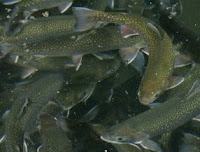
picture of high density arctic char farming in tanks
Arctic Char Growing In Tanks
My experiences raising Arctic Char in land based farms using tanks and raceways, with groundwater supplies and water recirculation aquaculture systems, have been positive overall.

I am what you may call a Charr fanatic since the early eighties and most of my experience has been hard won. The road to now has had its share of bumps and even a couple of cliff sized falls. There have fortunately also been some sunny times and even pay days. It has been interesting and rewarding in many ways but also frustrating at times.

I have grown Char at stocking densities that exceed the normal for rainbow trout or salmon in similar farming systems. In a properly designed and operated land based farm, this factor can lead to increased production amounts per unit of rearing space. The high density stocking characteristics of the species can allow the production intensification necessary in controlled systems and provide increased economy of scale, helping to offset the increased costs of building eco-friendly land based fish farms.Full article published at northernaquafarms.com "Arctic Charr Aquaculture - History and Experiences in Canada"

Related Content

Hobby Farming - A Growing Trend
Water Recirculation Aquaculture
Aquaponics - Sustainable Farming


Read More..

Jumat, 24 Juni 2016

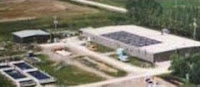
picture of land based fish farm in manitoba
My First Fish Farm in Manitoba
I often receive requests for information on Aquaculture in Manitoba. Many requests are from persons wanting to research the business potential of fish farming as an alternative or supplementary form of agriculture or as a standalone business. The following provides a quick overview of Aquaculture in Manitoba with links to further resources.

Aquaculture, or fish farming, has been practiced in Manitoba since the late 1960s. It began with experimental stocking and fish growth studies in “pothole” lakes in the Erickson area in southwestern Manitoba. These pothole stockings were conducted by the DFO Canada Freshwater Institute and the Manitoba Government. Many of these lakes were considered to have the potential to be productive waters for raising fish and experimental stocking and monitoring was undertaken to help determine fish performance. Rainbow trout quickly became the species of choice due to their rapid rate of growth and their general hardiness. Rainbow trout continue to be the primary species stocked into lakes and dugouts in Manitoba.

Manitoba fish farming activities have primarily taken the form of hobby farming, involving the stocking of fingerling sized young fish into farm dugouts or ponds on private lands, or into small lakes on Crown lands, primarily for recreational purposes. The stock is generally allowed to grow by foraging on available food sources within the pond. This practice is known as Extensive Aquaculture. Depending on the owner preference, pond environment and fish growth desires the food source is sometimes supplemented by the feeding of prepared commercial fish food.

A good source of information on this type of activity is a booklet “Trout Farming in Manitoba”, available from the Fisheries Branch of the Manitoba Department of Water Stewardship.

Intensive aquaculture, which takes the form of fish rearing in cages, tanks, or raceways, is relatively new in Manitoba. There are currently only a few commercial aquaculture operations in the province. However interest in commercial aquaculture as a means of agriculture diversification or as an alternative crop is increasing.

Intensive aquaculture requires a higher degree of rearing environmental control, increased fish stocking densities, controlled feeding rates with prepared nutrient dense diets and greater farm management requirements. Intensive aquaculture operations require more capital investment , involves the use of more technologies and equipment and necessitate increased levels of manpower .

As mentioned extensive aquaculture is carried out in lakes or dugouts, present and future intensive aquaculture operations in Manitoba will involve the growing fish inside buildings under controlled conditions using tanks of varied sizes and shapes (land-based), or in cages moored in deep lakes.

The province of Manitoba offers “A Guide to Intensive aquaculture in Manitoba” as a good starting point for those exploring commercial fish farming in the province.

I always advise people to research the potential of Aquaculture as a business in as much detail as they can before deciding if its an opportunity that fits both your financial and location resources.

Aquaculture does offer good potential for financial returns and it can be a rewarding business and one you can be be proud of. Like any other idea, your business size and scope has to suit you and your resources to have the best chance for success.

More information on commercial land based Aquaculture can also be found at This link.

Information on Aquaponics farming, an excellent way to grow your own supply of fresh herbs, vegetables and fish year round can now be found at This Page.

Update: A Canadian model aqua-farm demonstrating the viability of indoor fish rearing on the Prairies is now producing Rainbow Trout. The farm is a research data collection site to answer the many questions would-be investors and regulatory agencies will have about fish-farm operations. Link to AGcanada.com Story

B&B Freshwater Fish Farm owned by the McDonald family and located near Gunton Manitoba, is expanding. Rick McDonald converted an unused hog barn to fish farming. They now raise Arctic Char and maintain one of the few certified disease free breeding stocks in the world today. They produce Arctic Char eggs and young fish plus some Rainbow Trout Read More Here.

Read More..

Minggu, 19 Juni 2016

The Interfaith Hunger Coalition was present at the End Hunger in New Mexico summit this past Wednesday and Thursday.  Ellen Buelow (Holy Rosary Catholic Community) led a workshop  with the help of Judy Messal (All Saints Lutheran Church) and Kathy Freeze (Catholic Charities of Central New Mexico). The workshop presented the history, goals and mission statement of the IFC as well as some data on hunger in New Mexico (courtesy of our partner New Mexico Voices for Children.

While most of our work has been in Albuquerque, many of the participants in the workshop were from communities elsewhere in New Mexico, including Roswell, Ruidoso, Cloudcroft and the Navajo Nation. In addition to learning about the IHC, participants shared their experiences and challenges working with people who are vulnerable to hunger.  For the members of the Chaves County  J.O.Y. Centers (pictured at left), a main concern was hunger among seniors.

 We also had a display table coordinated by Bert Scott (Central
United Methodist Church). Most of the materials for the display were designed by Jeanne Elmhorst (Albuquerque Mennonite Church).  Many people volunteered to staff the table, including Joy Dinaro (Immaculate Conception Catholic Church) and Ian Wood (Archdiocese of Santa Fe), pictured at left, Carole Everton (Holy Rosary Catholic Community), Kathryn Arndt (Community of Hope) and others . We hope that our presence at the summit allowed more people to know about us, which is an important step in the growth of our coalition.
Read More..

Sabtu, 18 Juni 2016

Hello Everybody,
This is my first post in the blog. Aquaponics is a beautiful food production system that works for me. Its ideal for people who are in a busy schedule of their day to day job.
From my experience this system is easy to maintain. All you have to do is feed the fish twice or thrice a day depending on the kind of fish you keep, check if the pump is working and thats it.

This system has been working beautifully for me for the last year and a half.
I am using this blog to share my learnings and hope to get lot more people interested in growing your own fresh organic food at home.

My first grow large bed

cauliflower


Read More..

Jumat, 17 Juni 2016

The New Mexico Food and Agriculture Policy Council invites you to the Fourth Annual New Mexico Food and Farms Day at the State Capital.  The event is held in conjunction with  New Mexico School Nutrition Day, Cooking With Kids Day and the New Mexico Academy of Nutrition and Dietetics Day at the Legislature.

"New Mexico has a vibrant food and farming culture that is significant to our rural economy and provides employment opportunities on farm; in direct, wholesale, and retail opportunities; in food processing, distribution, value-added businesses," said Pam Roy, coordinator of the NMFAC and Farm to Table.

"As a broad based group of partners and participants, were highlighting the Farm to School movement in New Mexico and the many schools that buy fresh fruits and vegetables from local farmers, school food service who care about providing meals with New Mexico grown produce, and most important, students who learn to incorporate fresh produce in their diets and enjoy experiential learning through programs like Cooking with Kids, Kids Cook, school gardens and more," added Roy. "Our children have the opportunity to enjoy New Mexico grown fresh fruits and vegetables in school meals and snack programs."

The day will include:
8:00 - 9:00am
Education Through Advocacy, room 324 at the State Capital - Participants will get a brief overview of the New Mexico legislative process before launching into a morning of fast paced activities. By Invite Only

8:30 - 11:00am
In the East Wing of the Capital (next to the Rotunda), organizations and agencies will share information and educate the public about their programs and their relationship to each other and the goals and purpose of the Day and beyond.

9:00 - 9:45am
Celebrate the 1st Annual Farm to School Award Ceremony and Press Conference. At the Rotunda, this special awards ceremony will recognize key individuals and their organizations for their work in creating educational programs in schools for children to learn about the world of food and gardening; food service and food entrepreneurs who have, through innovation and policy, changed the rules to be able to partner with local farmers to buy the freshest local produce for school meals; and, farmers who have been on the front lines for change by building partnerships with schools to purchase locally grown produce and paving the path for others. This will be the first on many occasions to honor leaders, risk takers, innovators, and believers.

10:00 - 12 noon
The New Mexico Legislature will honor New Mexico Food ad Farms Day, New Mexico School Nutrition Day, and Cooking with Kids Day in both the House and Senate Chambers. Policymakers will highlight the importance of these events and most importantly will recognize individuals and organizations for their efforts in building an important aspect of food, farming, and health initiatives in New Mexico.

12:30 - 3:00pm
Round Table celebration, discussion, and next steps by all of the groups and individuals involved. We ask ourselves what we learned, how it builds relationships and coordination, and what we commit to doing moving forward. Our discussion includes providing lunch. Venue TBD (more information forthcoming)

The organizations joining in the celebration include: New Mexico Food and Agriculture Policy Council, Farm to Table, New Mexico School Nutrition Association, Siete Del Norte, Cooking with Kids, Mid Rio Grande Council of Governments, New Mexico Cooperative Extension Service, New Mexico Dietetics Association, New Mexico Farmers Marketing Association, Santa Fe Food Policy Council, FoodCorps, Community Outreach Patient Empowerment (COPE - a Navajo Nation Coalition and youth group NCHO), Dine Food Sovereignty Alliance, and more.
Read More..

Senin, 13 Juni 2016

Help Rick Steves End Hunger this Christmas. Photo: Rick Steves in Salzburg, Germany. "...Im one of thousands of Christian Americans who really see Bread for the World not as a charity but as a service. Together, we want to fight hunger, and Bread for the World represents that, and does our work right here in Washington, D.C.excerpt from Rick Steves address at the Bread for the World national gathering, June 2014
Rick Steves loves Bread for the World. Every Christmas season, he puts together a special appeal to raise funds for our organization. The beloved television travel host and author has an offer for you again this year.

"Heres my challenge to you," Steves says on his Travel Blog. "Make a gift of $100 or more and as a thank you, Ill match your gifts (up to $250,000) and send you my European Christmas gift package or my Complete Collection 2000-2016 DVD Box Set (all 100 of my travel shows)."

This video tells you more about the European Christmas Gift Package


If you make your gift by December 10 (thats next Thursday!),  you’ll get everything in time for Christmas. "I’ll happily pay for the cost of these gifts and postage so that Bread can use 100 percent of your donation for their work," said Steves.

Read More..

Minggu, 12 Juni 2016

FIS - Worldnews - OriginOils technology can reduce toxin levels in aquaculture

seafood waiting to catch a fish

OriginOil, Inc has announced that its Solids Out of Solution(TM) (SOS) technology could be used by the aquaculture industry to lower toxin levels, and that fish farmers could feed algae to their farmed fish on a wide scale. 

"Using OriginOil technology, WeFeedUs believes it may be able to accelerate aquaculture research and development and, ultimately, advance the commercialization of a proprietary Algal inclusion, high-protein, high-value, specialty fish feed," said Mike Andrus, Co-Founder and Principal of WeFeedUs. Read More
Read More..

Jumat, 10 Juni 2016

“We come before you to confess we seek peace through violence and find security in weapons. And we abandon the hungry and the sick and the homeless, and we pursue wealth at all costs. We mistreat the creation you have entrusted to our care. Forgive us, Holy One for our hubris and our short-sighted behavior. Even so, you love us.” 

-Rev. Marci Auld Glass, Pastor,Southminster Presbyterian Church, in Boise, Idaho, Tuesday, Jan. 5, at the start of a city coucil meeting. (Read more this srticle in Idaho Statesman).

Rev. Glass is a member the governing board of  Ghost Ranch in northern New Mexico
Read More..
Points to consider based on experiences in the Prairie Region of Canada. Dec 19 2005

Recent times have seen an increased interest in Aquaculture as a potential opportunity for farm diversification; this renewed interest is encouraging and worthwhile. Much of this new interest is at a grass roots level where individual family farms are actively seeking alternate forms of agriculture and new economic opportunities. However this heightened awareness will fade unless concrete and solution oriented efforts are made at mitigating the potential knowledge and educational constraints faced by many would be participates.

To successfully integrate commercial scale Aquaculture production into an existing agriculture farm the economic considerations must be carefully examined. A farmer must be able to review and access the potential long-term benefits and become convinced that they warrant the investment required. The potential risks must be fully explored and accounted for within any financial modeling. The operation must also be planned to make the best synergistic use existing assets while still being capable of performing at an economically viable level.

I have over the years realized (through trial and error) that farm design alone does not guarantee success in the business. Sure, there are many new and exciting technologies emerging bringing improvements are good for the industry. It is exciting that recent advances greatly improved the performance, sustainability eco-friendliness of the industry. New farm designs and system technologies have made it possible that Aqua Farms can be operated in areas with limited water supplies and can be combined with other crop production to create even further on farm diversification. The technology are great and required, but Technology alone does not guarantee success.

Future fish farmers will also require comprehensive data dealing with production options, alternatives, investment required, operational costs, benefits to existing operations and other social economic factors. In addition the farmer needs to have access to training and skills development and longer term support for continual evaluation, refinements and business expansion.

Without training, good knowledge and proper management resources, it is unlikely that the average farmer wishing to diversify into aquaculture will be successful. Commercial scale Aqua Farming can require a sizable financial investments making knowledge and management ability all the more important in protecting and achieving a return on investment.

Most of the key deciding factors governing Aqua Farming investment decisions are not readily apparent or within easy access to the general public. In Manitoba, this lack of knowledge combined wuth the absense of a facility (or means) to witness the demonstration of working viable models, creates a justified roadblock in the minds of people that would otherwise embrace the opportunity. Many potential farmers do not yet have a comfort level sufficent to make the decision to invest in the industry. Their thoughts could be expressed as “let me see a working example and a business plan then I can determine if it can work for me”.

At this stage, it wouldn’t be wise to encourage new industry entrants "to attempt to duplicate a full scale commercial farm" without first getting their feet wet and gaining first hand knowledge and training.

However if the private sector and public sector collaborate in a mutually beneficial way it is likely that more effective co-sponsored research and development activities can be undertaken providing timely support to commercial operators while ensuring that more potential operators will be able to access top level up to date knowledge.

An effective means to demonstrate the farming process in a practical and scalable fashion will encourage further commercial development. Farm demonstration and training are two key ingredients in fostering future aqua farm development. These have to be made available in a manner that fits with the time and financial resources of the existing agri-business owner.

Smaller scale demonstration type farms are required to trigger growth of the provincial industry while allowing lower levels of risk exposure by future operators.

Commercially oriented demonstration farms with an information exchange component have been proven effective in furthering the development of fish farming in other locations.

Related Article “Starting a New Aquaculture Business? – Here are some suggested guidelines to help ”
Read More..

Senin, 06 Juni 2016

Part I of Aquaponics in New England discusses how aquaponics can supplement the offerings of traditional farming and fishing where they have limits. A PDF of the entire paper (Parts I-III) can be downloaded here, including a full list of sources referenced by footnotes.

Supplement Traditional Farming & Fishing
 
First, it is important to understand the current state of agricultural affairs in Massachusetts. After a precipitous decline in the 1960s, the number of farms in the state is now on the rise (see Figure 1). As of 2008, the state had more than 7,700 farms (including aquaculture and nurseries).1 Many of these farms have hit on effective and profitable strategies, such as Community Supported Agriculture, farmers markets, and/or organic certification. The growth is fueled significantly by organic agriculture. Between 1997 and 2008, the number of farms in Massachusetts increased 28% while the number of organic farms increased over 3,000% (from 3 to 103).1


Traditional Farming
Despite the growth, traditional farming has limits in Massachusetts. Whether organic or not, traditional farms have a limited growing season. Many cold hardy species...
Read more »
Read More..

Minggu, 05 Juni 2016


Courtesy of ClipArtSheep  
(Please note: All these sites already have all the volunteers they need. The one location that might need help is La Mesa Presbyterian Church. You can call the church office, 255-8095, and ask: “What can I do to help you out on Thanksgiving Day?)

November 21 (Saturday)  
11:00 am to 3:00 pm -- Chava Trucking Company Thanksgiving Dinner, 409 Clark Road SW (2-1/2 miles south of Rio Bravo off of 2nd Street).

Shuttle service will be provided, beginning at 10:30 am, at St. Martin’s, Good Shepherd Center, Albuquerque Rescue Mission, Project Share, Noon Day, Salvation Army Temple (on Broadway & Lead), and Joy Junction

November 23 (Monday)  
  • 6:00-7:00 pm – Pre-Thanksgiving meal at Joy Junction

November 24 (Tuesday)
  •  8:00 am to 4:00 pm -- Noon Day is open (showers, laundry and breakfast, but no lunch)
  • 11:00 am to 2:00 pm – Albuquerque Rescue Mission’s Thanksgiving meal (no breakfast or dinner that day at ARM)
*****All other sites will have regular schedule*****

November 25 (Wednesday) 
  • 8:00 to 11:00 am -- Noon Day is open (showers, laundry and breakfast, but no lunch)
  • 11:00 am to 2:00 pm – Joy Junction’s Thanksgiving meal at the Convention Center downtown (you can get free tickets at various shelters for reserved meal times, but no one will be turned away)
*****All other sites will have regular schedule (including HCH)*****

Courtesy of ClipArtSheep
Thanksgiving Day (Thursday).
  • There will be a circle of remembrance, a sunrise gathering in honor of Native peoples (6:25 am sunrise) in the parking lot of the Albuquerque Center for Peace & Justice (Harvard & Silver SE)
  • 8:30 to 9:30 am – Thanksgiving brunch at Good Shepherd Center (only meal that day at Good Shepherd)
  • 9:00 am – holiday meal at St. Martin’s (hours are 7:00 to 11:00 am on Thanksgiving Day)
  • 10:00 am to 2:00 pm –Thanksgiving meal at Salvation Army Temple, 501 Broadway SE (& Lead)
  • 11:00 am to 2:00 pm – Thanksgiving meal at La Mesa Presbyterian Church, 7401 Copper NE (north of Central, east of Louisiana)
  • 2:00 to 4:00 pm – Thanksgiving dinner at Joy Junction
  • 5:00 to 6:00 pm – Thanksgiving dinner at Project Share, 1515 Yale SE (south of Kathryn)
  • 5:00 to 6:00 pm – regular dinner at Albuquerque Rescue Mission (no breakfast that day, but opens at 12:30 pm)
    **Albuquerque Healthcare for the Homeless (HCH) and Noon Day will be closed****

November 27 (Friday) Homeless services: St. Martin’s hours will be open 7-4 with 10:00 am meal only; all other sites (Noon Day, Healthcare for the Homeless (HCH), Good Shepherd Center, Albuquerque Rescue Mission and others) will have regular schedule.
Read More..

Sabtu, 04 Juni 2016

Here is a quote from Pope Francis in his address to Congress on Sept. 24.
"A nation can be considered great when it defends liberty as Lincoln did, when it fosters a culture which enables people to dream of full rights for all their brothers and sisters, as Martin Luther King sought to do; when it strives for justice and the cause of the oppressed, as Dorothy Day did by her tireless work, the fruit of a faith which becomes dialogue and sows peace in the contemplative style of Thomas Merton." 
Here is the full text of the popes address to Congress.

And this is how our friend Richard Wood, a professor of sociology at the University of New Mexico, tweeted the quote. 

Prof. Wood, who traveled to Washington and Philadelphia for the popes visit, wrote a blog piece in anticipation of the pontiffs trip to our country.  Here is an excerpt:

Precisely what Pope Francis will say to America will be revealed only when he steps on our shores. But his visit seems likely to spotlight how the Catholic Church works on multiple levels like no other human agency in the world: with deep roots in local communities and people’s concrete lives; guided by a coherent set of teachings about human life and meaning; driven by transcendent values and Gospel teachings; and capable of worldwide coordination under Spirit-inspired leadership. 
 Read Full Post
Read More..
One way the U.N. hopes to end hunger: encourage sustainable food production among indigenous peoples by 2030. On the Navajo Nation, some tribal citizens are already on that track. “When we raise our own sheep, we’re able to sustain ourselves,” said Aretta Begay. “We’re able to feed our own family, whether it’s big or small.” But progress in Navajo Nation, with its high poverty rates and long-standing lack of access to nutritious food, will be an uphill battle.  article in Al Jazeera America

Source: Diné Policy Institute. Map by Alex Newman/Al Jazeera America.
The problem of hunger and food insecurity in the Navajo nation has been well documented. With fewer than a dozen grocery stores to serve nearly 300,000 residents in an area about the size of South Carolina, access to nutritious food is almost non-existent.

"Gas stations and trading posts fill the vast spaces in between those stores, selling foods loaded with salt, sugar, fat and preservatives. According to the Diné Community Advocacy Alliance, a Navajo think tank, 80 percent of food sold in the Navajo Nation could be considered junk," said a report in Al Jazeera America. "One in three residents is diabetic or prediabetic, and recent studies show that heart disease is the second-leading cause of death among tribal citizens living on the reservation."

In a  recent report to Congress, eentitled “Addressing Child Hunger and Obesity in Indian Country,” researchers found that Native American children had “approximately twice the levels of food insecurity, obesity and Type 2 diabetes relative to the averages for all U.S. children of similar ages,” said Al Jazeera America.

The Navajo nation has attempted to address the problem by proposing a tax on junk food in 2014 and eliminating an existing tax on fruits and vegetables. However, making junk food more expensive only solves the problem partially. The supply side of the equation is also important. Even if fruits and vegetables are less expensive, how do you ensure that you increase availability? Some residents like Aretta Begay grow a small vegetable garden and raise churro sheep to feed their families.“We have a huge problem with having access to good, quality food,” she tells Al Jazeera America. “We don’t have access to grocery stores.”

Providing the resources for personal and community gardens would go a long way toward addressing the problem. The dilemma is common not only to the Navajo nation but to many Indian reservations are rural areas around the country.

Fortunately, the recently announced Global Goals for Sustainable Development, and in particular Goal 2 of Zero Hunger, open the door for our public officials at all levels to find creative solutions to address the problem of a lack of food access.

"The question of food access could soon be getting renewed focus," said the Al Jazeera America report. "Starting in January, the United States will be aiming to reach the United Nations’ new Sustainable Development Goals. One of the priorities is ensuring access to nutritious food. In Indian Country, achieving that goal is a long way off."

The Al Jazeera report--written by Tristan Ahtone in Red Mesa, Ariz.,and Jolene Yazzie in Lupton, Ariz., with photos by Jolene Yazzie--is very comprehensive, offering statistics, anecdotes, graphics and other valuable information. (One resident who was interviewed for the article allowed the reporters to look into their refrigerator. Check out the full article to see what was found in the fridge).
Read More..

Jumat, 03 Juni 2016

Photo: Bread for the World
Over 100 Christian leaders have asked each presidential candidate, “What would you do as president to offer help and opportunity to hungry and poor people in the United States and around the world?” These videos, produced by the campaigns, are their response. The Circle of Protection, in partnership with Bread for the World, presents them without comment or endorsement. Additional candidate videos will be added as they are received.  As of Sept. 9, nine candidates (six Republicans and three Democrats) had responded.

The presidential videos are a major part of Bread for the World’s efforts to make hunger and poverty part of the national conversation during the campaigns for both president and Congress. Read more in Bread Blog

This link has the video responses from Jeb Bush, Dr. Ben Carson, Hillary Clinton, Sen. Ted Cruz, Carly Fiorina, Lindsey Graham, Mike Huckabee, Martin OMalley and Sen. Bernie Sanders.

(The videos have received coverage in religious and other media and in some religious Web sites, including Mother Jones, Catholic News Service, The National Catholic Reporter, The Christian Post, Mennonite Church USA, National Association of Evangelicals and PRNewswire. Most of this coverage took place when the initial set of videos from six candidates was released in July). 
Read More..